Wednesday, November 16, 2016

Weekend in Kavadarci!

Zdravo!

Saturday we took the opportunity to go to Kavadarci (in the south of Macedonia) with our coordinator, he used to live there and we wanted to meet people from rural areas for our project. It was also nice to discover the city and our coordinator's previous employment with the youth organisation, CreACTive.

How is the best way to meet local people? We spent the saturday night in local pubs and had the chance to meet other international volunteers (EVS, Peacecorps...) and local youth workers.

Understanding rural life is not always easy, so on Sunday we went to Marena, a little village near Kavadarci to visit and meet Vancho a local farmer who lives with his mother in a house in the countryside.

Their welcoming was perfect, they showed us the house and the garden, gave us an interview and invited us to eat and drink homemade rakija and ajvar, what more can we ask for :) ?


Under a beautiful blue sky, we walked to find the CreACTive farm, a 500 square meters land run by the association, where local youth and international volunteers work together, and can discover the permaculture techniques, eco-construction principles, composting and other environmental values.

Perhaps in the future the youth from Marena and Kavadarci could bring these ecological techniques to the rest of farmers and habitants in the area, it would be great.


Back in town, we returned to the pub for a meeting with one of the youth involved in the CreACTive projects, he told us about his experiences and we shared a good moment.

Intense weekend if we can say, but we enjoyed it. We love to meet new people and discover new places, and it was very productive for our 'coming soon' photo exhibition.

The trip back from Kavadarci to Kumanovo allowed us to have some rest. Our coordinators version of a direct bus, it wasn't. We stopped for 45 minutes in Skopje! but finally we made it.

Counting the days until the next discovering trip around Macedonia, we think it wont be before the end of our EVS period, which is almost over :(

Hope to see you around!

Tuesday, November 15, 2016

Artistic workshops in the Staro Nagoričane School

In the framework of our Intercult'rural project we are organising artistic workshops with the 8th grade students from the Staro Nagoričane School.

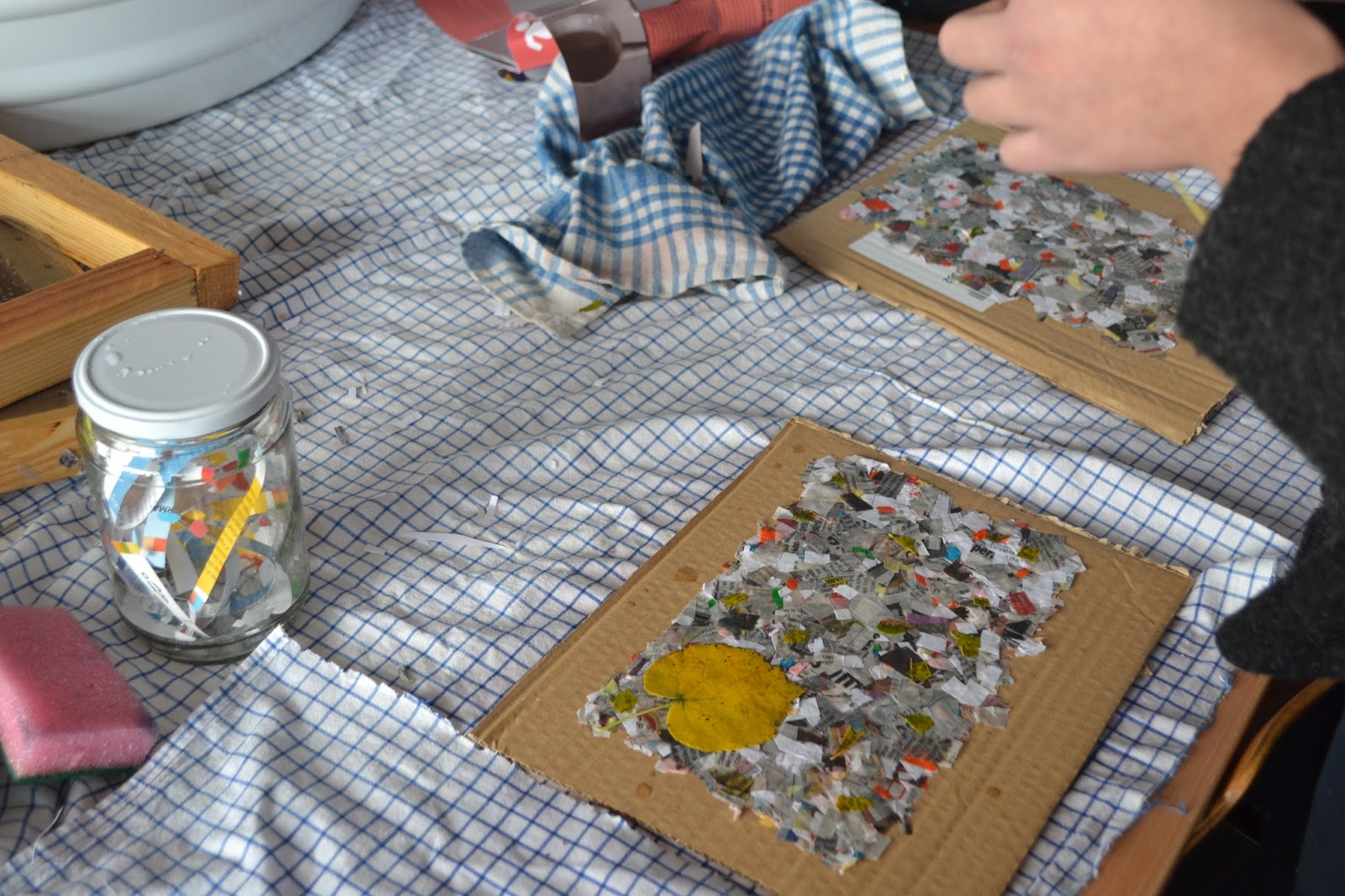
Every monday we visit the school and propose artistic and creative workshops to the kids. Normally based in the idea of recyclart, we are showing them how different materials can be reused in a creative way giving them a “second life”. 

During this workshops we can also practise with them the concepts learned at wednesday's english lessons! From our point of view, it seems like they enjoy these activities.


This week the children have learnt how to make recycled paper, where the paper is coming from and which are the consequences when we waste it!


Two weeks ago they made halloween decorations (re)using toilet paper rolls and soft cardboard boxes like cereals or cookies boxes, and last week they created recycled boxes from milk and juice tetra-paks :)


See U next monday for more creativity!

Wednesday, November 9, 2016

Some of our social life :)

Hello everyone!

Tic-tac, tic-tac...we are already in the middle of our EVS (even more)!! Time flies when you're having fun... our mission is going well, like we said in posts before, we enjoy going to the school in the rural area, and the activities in MultiKulti are evolviong positively :)

But not all is work!! We are enjoying our life in Kumanovo... cafes, pool, walks: who said you can get bored in this city ;)

And also....sports! Yesterday we went to the local Sports Hall to see a Balkan League match between Kumanovo and Kojub.


 During the match the ambiance was great, Kumani ultras have lots of energy! 


Finally the Kumanovo team won 84 - 76 after an equilibrated match, at half time they went to the locker rooms with one point of disadvantage, 40 - 41, so Bravo guys! 

We let you with a photo from our weekend in Thessaloniki (amazing city!), this one we will be in south Macedonia meeting people for our rural development project :)

Till next time!


Monday, November 7, 2016

My first week in Tabanovce

In the village of Tabanovce, around 10 kilometers from the city of Kumanovo, there is a refugee camp in which currently around 120 migrants live. Most of them have been there for months without any freedom of movement. The situation is the result of Macedonia closing its borders in March 2016 and hence blocking the route for migrants to pass from Greece to Serbia and from there on to EU countries. Since March a couple of hundred migrants are stuck in camps in Gevgelija (in the south of Macedonia, close to Greek border) and Tabanovce. The migrants who have chosen to seek asylum in Macedonia, have recently been admitted to transit centers in Skopje where conditions are slightly better for them. However, the majority of the people in the camps do not want to seek asylum in Macedonia as their plan is to continue to Germany or another Western European country where they might have family or other ties.

Last week, as part of LEGIS-CID co-operation (to know more about what LEGIS is doing with the refugees, follow them on Facebook!), I (finally!) get to visit Tabanovce with LEGIS local volunteers and staff twice; Thursday was mainly about seeing around but Friday I spent several hours in the camp and get to talk to people and play with the children. The entries and exists of the camp are controlled and only persons holding a pass can entry. The camp itself is a in a sort of a field practically in the border of Serbia, close to the railway station and some private houses. The migrants live in containers and many NGOs have their own containers in which they organize activities like games for children, sports for adults, language lessons etc. Currently the camp is quite empty and the facilitates seem to be quite all right. The biggest problem is that many people have spent up to seven months in the camp so they are very frustrated of the situation; they are kept almost like prisoners without freedom of movement, without being able to work or go to a proper school (about half living in the camp are children) and no one knows how much longer the situation will last.

People who are not used to work with migrants and refugees often think it is something scary or really hard psychologically to visit refugee camps or transit centers. And yes, hearing the stories of their journeys can be really tough and it definitely is frustrating not being able to help them achieve what they want. But the truth is, people are rather similar no matter where they come from and what their situation is; when spending time with them you often end up talking about everything and nothing like with anyone else. The children enjoy running around, playing games, drawing and painting, like children do all over the world - but these kids seem to be particularly happy about the activities as there is not endlessly to do in the camps and because it helps them to forget about the situation even for a while. And that is what we as volunteers are in the camps for. :)


Paintings by children in Tabanovce 2016


Jannika

Tuesday, November 1, 2016

Friday, October 28, 2016

Immigrant, Refugee or a Foreigner? Catch the right terms!

When talking about migrants, minorities and other vulnerable groups, the use of right terminology is very important. But people who are not so familiar with these terms get easily confused between migrant and immigrant, refugee and asylum-seeker, national and foreigner... To help you out with this struggle, let me explain you some of the most important terms:
  

Migrant / Immigrant / Emigrant

Migrant is a person who was born in a foreign country, as a foreigner (regarding the current host-country) and who has crossed a border to live in another country. Often used term immigrant emphasizes the host-country's point of view, where as emigrant can be used by the country of origin. To take the whole process of emigration and immigration into consideration, and not to forget that migration has consequences for both countries (plus for the transit countries!), it is preferably use the globalizing term migrant.
For example, if Abdou migrates from Senegal to France, he is an emigrant in Senegal and an immigrant in France, but globally we can call him a migrant.


Refugee / Asylum-seeker

Often people get confused with terms migrant and refugee and seem to think that being a refugee is somehow better than being a migrant. In fact, everyone who moves from a country to another is a migrant, where as those who try to seek asylum are also asylum-seekers and only those who get granted asylum (according to UN's Convention Relating to Refugee Status) are refugees. However, all of them are migrants and not being able to obtain the refugee-status does not mean that those migrants would not have serious reasons having left their countries. Currently many NGO's have chosen to use the term refugee when actually talking about migrants/asylum-seekers because of the term migrant's pejorative echo in many people's minds.
For example, if Mehmet moves from Afghanistan to Sweden he is a migrant. If he seeks an asylum in Sweden, he becomes an asylum seeker. If the asylum grant gets approved he becomes a refugee. However, he remains still a migrant as well.


National / Foreigner

The pair of words that also creates confusion is national and foreigner and they can be mixed up with the term immigrant too. National is someone having the nationality/citizenship (passport, right to vote etc.) of a country. Foreigner is someone not having these rights, even if he lives in the country. As opposed to immigrant, this is a status that might change; when a person immigrates to a country, he usually is a foreigner in that country, but in some years he might become a national. However, he remains always an immigrant – that status does not depend on nationality.
For example, if Alexander from Macedonia moves to Italy, he is an immigrant in Italy and most likely a foreigner. If after five years of living in Italy he manages to acquire Italian nationality, he becomes a national. However, he is still an immigrant.
Also, a good thing to note is that nationality legally speaking does not have anything to do with one's ethnic origin.
For example, most Albanians in Macedonia are Macedonians by nationality and Albanians only by their ethnic origin.   


Jannika

Thursday, October 27, 2016

Games of the World

Ready to play!

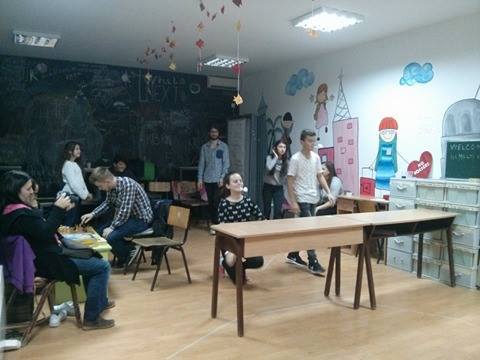
On Tuesday we organized an International Games Night in Multikulti. The event was organized rather on a short notice but despite tha more than 10 participants joined us. We had brought with us Jenga, Backgammon, Chess, Triomino and some card-games, but we were very happy that some children brought their favorite games also! In the end we were even learning some traditional dances all over the world - quite a successful night, we would say. :)


Triomino required some concentration.. but when the boys got, they couldn't stop playing! 
Jenga is always lots of fun!
Uno was brought by one of the participants and we all loved it!
Imagine a spoon, an egg and having to walk under the table.. the fastest team wins!

Our next activity is going to be a World Café (language exchange) tomorrow, friday from 17 to 19 at Ultra Caffe in Kumanovo. Join us and come to practice your English, French, Spanish... skills, teach us your language or just come to have fun and meet new people. See you tomorrow!

Monday, October 24, 2016

English course with children from rural area!

In the framework of our Intercult'rural project we are organising a non-formal English course with the 7th and 8th grade students from the Staro Nagoričane School.

  10 century Church of St. George, Staro Nagoricane

Every Wednesday after the school hours we are receiving the children in the youth center, located next to the school, for one hour of pedagogical games and activities. The objective of these classes is to make the children enjoy learning a foreign language.

After two sessions we can see that the children really appreciate having this unconventional activities. They participate actively and enjoy dicovering new ways to learn :)


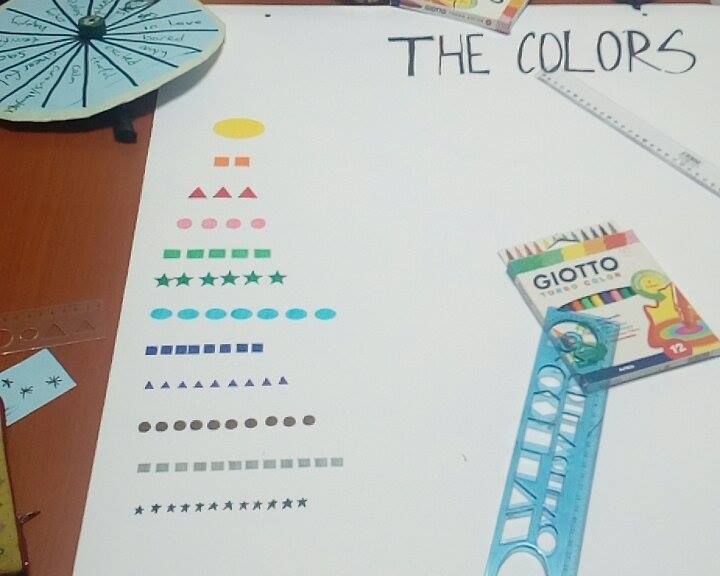
On our side we are very satisfied with this activity, it's very nice to share our time with these kids and feel that they are grateful for our presence. Next Wednesday: numbers and colors!


Work in progress...

Friday, October 21, 2016

Raising awareness on human rights and migration


This week is global Human Right's week and Thursday was dedicated to migration/refugees.
We wanted to do a little action in Kumanovo to inform people about this day and talk with them about migration to know what they think about it. So with our "No borders"-hearts we went to the main square of Kumanovo and spent few hours there talking to young people that passed by and who were not too busy.

So what do young "kumanovians" think about migration?

* First of all, many people link the subject to emigration from Macedonia and told us they want to migrate one day too. They think migrating to foreign countries (mainly to EU*) is a good opportunity for them to learn new skills and get new experiences. Moving to EU* to study or to work is unfortunately quite hard for them because of visa restrictions, but they are hoping that in few years Macedonia will join European Union which would make moving much easier for them.

* Some people we met said that there are no human rights in Macedonia and the opportunities to find a job for example are quite limited. That is why opinion of many people towards refugees is rather negative. They said that the refugees arriving to Macedonia are not bad people and they are in need of help, but the things are though for us Macedonians too so we just do not have ressources to help them.

* "Refugee-crisis" seems to be something people in Kumanovo do not know much about and they are not used to meet a lot of foreigners in their lives. They do not really know what to think about it and for some it felt even little scary when the refugees first started to arrive in the country. However, those who have actually met refugees and heard their stories said it had really touched them and they believe that this kind of humain dimension to the situation might change some people's opinions.

* Despite some concerns Kumanovians might have towards refugees, many of them still think that everyone should have the right to migrate, especially those who are coming from war riven areas or are otherwise persecuted. They think that migrants should be seen as individuals like everyone else and treated equally with the natives.

Now, that we have a proper idea of the attitudes towards migrants that young people here in Kumanovo have, we will keep working on raising the awareness of the situation and see what we can do to change the attitudes even a tiny bit. :)


NO BORDERS!


*EU: European Union

Tuesday, October 18, 2016

Movie Night / Филмска вечер / Nata e filmit


Welcome to watch City of God with us in Multikulti Thursday evening at 7pm!

In the poverty-stricken favelas of Rio de Janeiro in the 1970s, two young men choose different paths. Rocket (Alexandre Rodrigues) is a budding photographer who documents the increasing drug-related violence of his neighborhood. José "Zé" Pequeno (Leandro Firmino da Hora) is an ambitious drug dealer who uses Rocket and his photos as a way to increase his fame as a turf war erupts with his rival, "Knockout Ned" (Seu Jorge). The film was shot on location in Rio's poorest neighborhoods.
-------------------------------------------------------------------------------------------------------------------------